The gold price surge continued on April 21, 2025, as gold hit a record high of $3,385 per ounce. This milestone came amid a weakening U.S. dollar and renewed global trade tensions. Investors are increasingly turning to gold as a safe-haven asset, signaling market uncertainty and shifting investment strategies.
Gold Price Increase Driven by Dollar Weakness
The U.S. dollar index fell sharply, hitting its lowest level since January 2024. A weaker dollar typically boosts gold prices, as it makes the metal more attractive to international buyers. This contributed significantly to the ongoing gold price surge seen in recent weeks.
In addition, economic data indicating slower growth in key global markets has prompted investors to reduce their exposure to riskier assets. Gold’s long-standing reputation as a hedge against economic uncertainty has once again proven true.
Trade Tensions Fuel Demand for Safe-Haven Assets
Ongoing trade friction between major economies—particularly the U.S. and China—has triggered market anxiety. Announcements related to new tariffs and supply chain risks are further motivating the shift from equities to gold. This environment is ideal for a gold price surge to gain momentum.
Analysts Predict Continued Gold Price Growth
Market analysts suggest that the upward trend is far from over. If inflation persists and interest rates remain steady or fall, the gold price could climb even higher. Some predict that the next psychological barrier of $3,500 per ounce may soon be tested.
As the global economic landscape continues to evolve, gold is expected to remain a central pillar in investor portfolios. Whether as a hedge against inflation or a response to geopolitical unrest, the gold price surge is being closely monitored by financial experts.
YouTube said Monday it would settle a lawsuit brought by President Donald Trump for more than $24 million, adding to a growing list of settlements with tech and media companies that have amassed millions of dollars for Trump’s projects.
Trump sued after his YouTube account was banned in 2021. After the Jan. 6 riot, YouTube said content posted to Trump’s channel raised “concerns about the ongoing potential for violence.” His account was reinstated in 2023.
Monday’s settlement makes YouTube the last major tech platform to settle a lawsuit with Trump, who similarly sued Meta and Twitter for banning his accounts in the aftermath of Jan. 6. Meta, the owner of Facebook and Instagram, settled for $25 million, while Twitter, since renamed X, settled for about $10 million.
A notice of settlement for Trump’s lawsuit against YouTube details that $22 million of it will go toward building a new White House ballroom. Trump has touted that the addition will have room for 900 people, and the White House has said it could cost $200 million to build.
Other plaintiffs that joined Trump’s suit, such as the American Conservative Union and a number of other people, will get $2.5 million of the settlement.
In addition to tech companies, many major media outlets have settled lawsuits with Trump over the past year.
In July, Paramount Global settled with him for $16 million after he took issue with a “60 Minutes” interview with Kamala Harris that aired on CBS.
In December, Disney settled with Trump over a lawsuit in which he accused ABC and anchor George Stephanopoulos of defamation in an interview with Rep. Nancy Mace, R-S.C. Disney paid Trump’s future presidential library $15 million as part of the settlement.
Disney came under pressure from the administration again when it recently suspended “Jimmy Kimmel Live!” for nearly a week after two major station owners threatened to stop airing the show. One of the station owners, Nexstar, is seeking clearance from Trump’s Federal Communications Commission chairman for a $6.2 billion merger.
The other station owner, Sinclair, is reportedly considering a merger, which the FCC would also need to approve.
Trump is also suing The Wall Street Journal over its reporting about his friendship with Jeffrey Epstein, and he recently sued The New York Times for $15 billion. A judge struck down that lawsuit, though Trump could refile it.
The newly formed media corporation Paramount Skydance has acquired The Free Press, an online news and commentary outlet co-founded by Bari Weiss, who will join CBS News as editor-in-chief.
Weiss launched The Free Press in 2021 with her wife, Nellie Bowles, and her sister, Suzy Weiss. They have presented the publication as a heterodox alternative to the legacy news media and a bulwark against “ideological narratives,” particularly on the political left.
Bari Weiss in New York in 2024.Noam Galai / Getty Images for The Free Press file
The acquisition is one of Skydance chief David Ellison’s most significant early moves to reshape the news unit at Paramount, which he acquired in a blockbuster $8 billion deal earlier this year.
In seeking federal approval of the merger, Skydance vowed to embrace “diverse viewpoints” and represent “the varied ideological perspectives of American viewers.” The company also pledged to install an ombudsman at the nearly 100-year-old CBS News operation.
“This partnership allows our ethos of fearless, independent journalism to reach an enormous, diverse, and influential audience,” Weiss said in a news release. “We honor the extraordinary legacy of CBS News by committing ourselves to a singular mission: building the most trusted news organization of the 21st Century.”
The Free Press has roughly 1.5 million subscribers on Substack, with more than 170,000 of them paid, according to Paramount Skydance. The Financial Times estimated that the publication generates more than $15 million in annual subscription revenue. NBC News has not independently verified that figure.
“Bari is a proven champion of independent, principled journalism, and I am confident her entrepreneurial drive and editorial vision will invigorate CBS News,” Ellison said in a statement. “This move is part of Paramount’s bigger vision to modernize content and the way it connects — directly and passionately — to audiences around the world.”
The acquisition talks between Ellison and Weiss were first reported in late June by Status, a media industry newsletter. Ellison is the son of billionaire tech mogul Larry Ellison, the co-founder of the software firm Oracle.
Weiss co-founded The Free Press after quitting the opinion section of The New York Times. In a resignation letter that was published online, Weiss decried what she characterized as the “illiberal environment” at the newspaper.
The Free Press earned wide attention in April 2024 after it published an essay from Uri Berliner, a senior business editor at National Public Radio who accused his employer of organizing around a “progressive worldview.” Berliner then resigned from NPR and joined The Free Press.
The publication’s regular stable of columnists includes Tyler Cowen, an economist and podcaster; Matthew Continetti, the author of a book about the evolution of American conservatism; and Niall Ferguson, a British-American historian.
CBS News has repeatedly found itself in the national spotlight in recent months. President Donald Trump filed a lawsuit last year against Paramount accusing “60 Minutes” of deceptively editing an interview with then-Vice President Kamala Harris.
CBS denied the claim. Paramount settled Trump’s lawsuit for $16 million.
The Federal Communications Commission is still investigating whether CBS engaged in “news distortion.” The commission is chaired by Brendan Carr, who was appointed by Trump at the start of his second term.
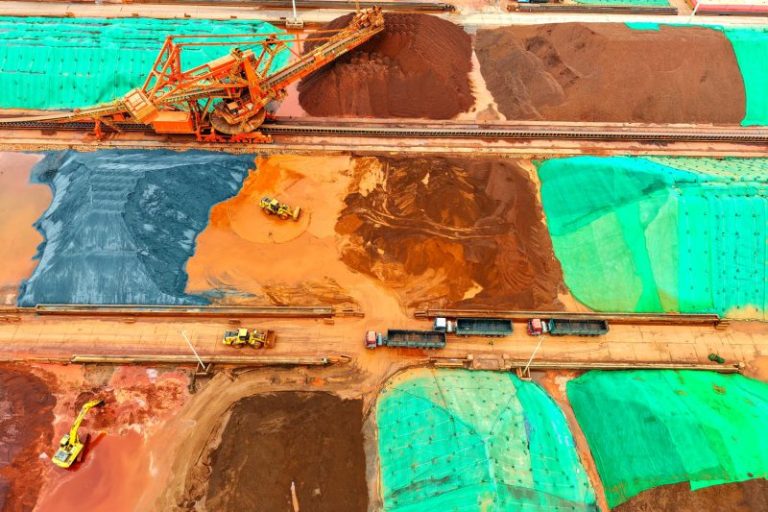
HONG KONG — China outlined new curbs on exports of rare earths and related technologies on Thursday, extending controls over use of the elements critical for many high-tech and military products ahead of a meeting in about three weeks between President Donald Trump and Chinese leader Xi Jinping.
The regulations announced by the Ministry of Commerce require foreign companies to get special approval to export items that contain even small traces of rare earths elements sourced from China. These critical minerals are needed in a broad range of products, from jet engines, radar systems and electric vehicles to consumer electronics including laptops and phones.
Beijing will also impose permitting requirements on exports of technologies related to rare earths mining, smelting, recycling and magnet-making, it said.
China accounts for nearly 70% of the world’s rare earths mining. It also controls roughly 90% of global rare earths processing. Access to such materials is a key point of contention in trade talks between Washington and Beijing.
As Trump has raised tariffs on imports of many products from China, Beijing has doubled down on controls on the strategically vital minerals, raising concerns over potential shortages for manufacturers in the U.S. and elsewhere.
It was not immediately clear how China plans to enforce the new policies overseas.
During a cabinet meeting Thursday, Trump said he had yet to be briefed on the new rules but suggested that the U.S. could stop buying Chinese goods. “We import from China massive amounts,” Trump said. “Maybe we’ll have to stop doing that.”
Neha Mukherjee, a rare earths analyst at Benchmark Mineral Intelligence, called the new export controls “a strategic move by China that mirror some of Washington’s new chip export rules.
“Most rare earth magnet manufacturers in the U.S., Japan and elsewhere remain heavily dependent on rare earths from China, so these restrictions will force some difficult decisions — especially for any company involved in military uses of rare earths because most of those export licenses are expected to be denied, he said.
“The message is clear: if the U.S. and its allies want supply chain security, they must build independent value chains from mine to magnet,” Mukherjee said.
The new restrictions are to “better safeguard national security” and to stop uses in “sensitive fields such as the military” that stem from rare earths processed or sourced from China or from its related technologies, the Commerce Ministry said.
It said some unnamed “overseas bodies and individuals” had transferred rare earths elements and technologies from China abroad for military or other sensitive uses which caused “significant damage” to its national security.
The new curbs were announced just weeks ahead of an expected meeting between Trump and Chinese President Xi Jinping on the sidelines of the Asia-Pacific Economic Cooperation forum in South Korea, that begins at the end of this month.
“Rare earths will continue to be a key part of negotiations for Washington and Beijing,” George Chen, a partner at The Asia Group, said in an emailed comment. “Both sides want more stability but there will be still a lot of noises before the two leaders, President Trump and Xi, can make a final deal next year when they meet. Those noises are all negotiation tactics.”
These new restrictions will likely prompt additional government and private investments in developing a mine-to-magnet supply chain outside of China. Mukherjee said that $520 million of investments in the American rare earths industry were announced just in the second quarter with most of that coming from the government.
And there is some progress already being made with American magnet maker Noveon announcing an agreement with Lynas Rare Earths this week to secure a supply of rare earths outside of China from Lynas’ mine in Australia, and MP Materials preparing to begin producing magnets later this year at its new plant in Texas that uses rare earths from the only U.S. mine that it operates in California.
In July, the U.S. Defense Department agreed to invest $400 million in shares of the Las Vegas company, establish a floor for the price of key elements, and ensure that all of the magnets made at a new plant in the first 10 years are purchased.
An MP Materials spokesperson said China’s action “reinforces the need for forward-leaning U.S. industrial policy. Building resilient supply chains is a matter of economic and national security.”
Wade Senti, president of the U.S. permanent magnet company AML, said it’s time to innovate.
“The game of chess that China is playing underscores the importance of developing innovation that changes the game and puts the United States in leading position,” Senti said.
Nazak Nikakhtar, a former Commerce Department undersecretary, said the new restrictions are “a significant development and escalation” by extending controls to related technology and equipment and to sectors like chipmakers. “This should be a wake-up call to the U.S. government that we need to invest in and appropriate more to domestic capabilities. Both are critical to rebuild America’s rare earths industrial base,” she said.
In April, Chinese authorities imposed export curbs on seven rare earth elements shortly after Trump unveiled his steep tariffs on many trading partners including China.
While supplies remain uncertain, China approved some permits for rare earth exports in June and said it was speeding up its approval processes.
Oil Prices Rebound After Trump’s Criticism of Fed Chair Powell
On April 22, 2025, oil prices rebound experienced a modest rebound following a significant drop the previous day. The initial decline was triggered by President Donald Trump’s renewed criticism of Federal Reserve Chair Jerome Powell, which unsettled financial markets and raised concerns about the central bank’s independence.
Market Reaction to Political Commentary
President Trump’s comments on Monday intensified investor fears regarding the Federal Reserve’s autonomy in setting monetary policy. The criticism led to a broad sell-off in equities and commodities, with oil prices bearing the brunt of the market’s anxiety.
Short-Covering Leads to Price Recovery
Despite the initial plunge, oil prices rebound edged higher on Tuesday as investors engaged in short-covering. Brent crude futures rose 0.5% to $66.62 per barrel, while West Texas Intermediate (WTI) crude for May delivery increased by 1% to $63.73 per barrel. The more actively traded WTI June contract also gained 0.7% to $62.84 per barrel.
Ongoing Economic Concerns
Market participants remain cautious amid ongoing fears of a potential recession linked to U.S. tariff policies and concerns over Federal Reserve independence. These factors have increased worries about the U.S. economy and crude demand. Additionally, progress in U.S.-Iran nuclear deal talks has eased supply concerns, potentially impacting oil prices further.
As the situation evolves, investors will closely monitor geopolitical developments and central bank communications to assess the potential long-term impacts on the energy markets.
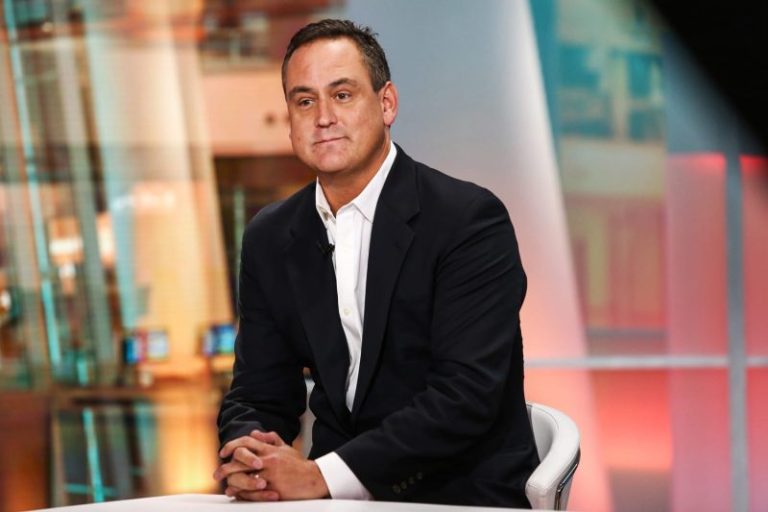
LendingTree CEO and founder Doug Lebda died in an all-terrain vehicle accident over the weekend, the online loaning platform said Monday.
In a company announcement, LendingTree confirmed that Lebda unexpectedly died on Sunday and that its leadership “deeply mourns his passing” while extending condolences to the executive’s loved ones.
“Doug was a visionary leader whose relentless drive, innovation and passion transformed the financial services landscape, touching the lives of millions of consumers,” LendingTree’s board of directors said in a statement. “His passion will continue to inspire us as we move forward together.”
Scott Peyree, LendingTree’s chief operating officer and president, has now been appointed CEO effective immediately. And lead independent director Steve Ozonian will also step into Lebda’s role as chairman of the board, the company said.
Shares of Charlotte, North Carolina-based LendingTree fell more than 2% by early afternoon trading on Monday.
Lebda founded LendingTree in 1996 — to “simplify the loan shopping process” after experiencing his own frustrations when getting his first mortgage, LendingTree’s website notes. The platform launched nationally in 1998 and became a public company in 2000. It was later acquired by internet conglomerate IAC/InterActiveCorp, before spinning off on its own again in 2008.
Today, LendingTree’s central online loaning marketplace helps users find and compare loans for mortgages, credit cards, insurance needs and more. LendingTree, Inc. also owns brands across the financial sector — including CompareCards and Value Penguin.
In addition to his multiple-decade career at LendingTree, Lebda also co-founded a financial services platform for children and families called Tykoon in 2010. He previously worked as an auditor and consultant for PriceWaterhouseCoopers.
“All of my ideas come from my own experiences and problems,” Lebda told The Wall Street Journal in a 2012 interview.
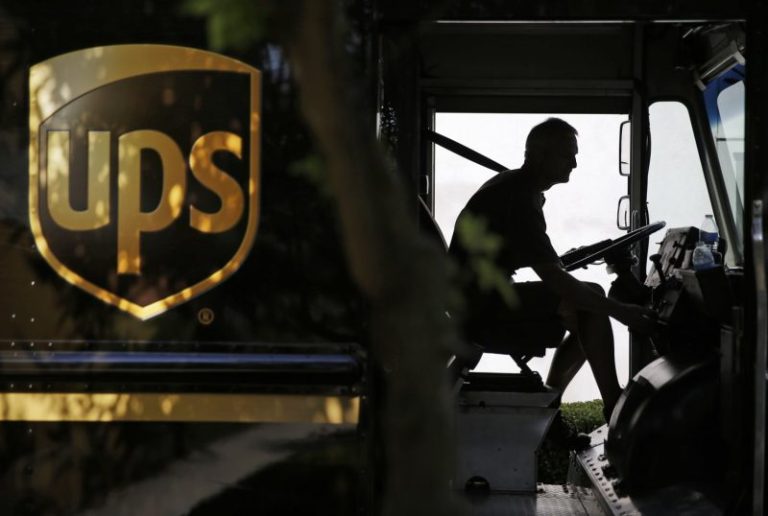
Thousands of U.S.-bound packages shipped by UPS are trapped at hubs across the country, unable to clear the maze of new customs requirements imposed by the Trump administration.
As packages flagged for customs issues pile up in UPS warehouses, the company told NBC News it has begun “disposing of” some shipments.
Frustrated UPS customers describe waiting for weeks and trying to make sense of scores of conflicting tracking updates from the world’s largest courier.
“I’ve never seen anything like this before,” Matthew Wasserbach, brokerage manager of Express Customs Clearance, said of the UPS backlog. “It’s totally unprecedented.”
Wasserbach’s New York City-based shipping services firm helps clients move shipments through customs. He said the company has seen a spike in inquiries for help with UPS customs clearance.
A Boeing 747 operated by UPS on the tarmac at Louisville International Airport in Kentucky during a winter storm on Feb. 3, 2022.Luke Sharrett / Bloomberg via Getty Images file
More than two dozen people who are waiting for their UPS packages explained the circumstances of their shipments to NBC News.
They described shipments of tea, telescopes, luxury glassware, musical instruments and more — some worth tens of thousands of dollars — all in limbo or perhaps gone.
Others have deep sentimental value: notebooks, diplomas and even engagement rings.
The frustration has exploded online, with customers sharing horror stories on Reddit of missing skin care products, art and collectibles.
They are confused and angry, and they want answers.
“It’s almost impossible to get through to anybody to figure out what is happening,” said Ashley Freberg, who said she is missing several boxes she shipped via UPS from England in September.
“Are my packages actually being destroyed or not?”
Freberg’s boxes of journals, records and books were shipped on Sept. 18, according to tracking documents she shared with NBC News.
Over the next two weeks, she received two separate notifications from UPS that her personal mementos had not cleared customs and as a result had been “disposed of” by UPS.
Then, on Oct. 1, a UPS tracking update appeared for her packages, saying they were on the way. The tracking updates Freberg showed NBC News for that shipment revealed it was the most recent update she had received.
UPS transport jets wait to be loaded with packages at UPS Worldport in Louisville, Ky., on April 27, 2021.Timothy D. Easley / AP file
While sentimental value is impossible to measure, other customers fear they will not be able to recover financially if their goods were destroyed.
Tea importer Lauren Purvis of Portland, Oregon, said five shipments from Japan, mostly containing matcha green tea and collectively worth more than $127,000, were all sent via UPS over the last few weeks and arrived at UPS’ international package processing hub in Louisville, Kentucky. Purvis has yet to receive any of the shipments, only a flurry of conflicting tracking updates from UPS.
A series of notifications for one shipment, which she shared with NBC News, said that the shipment had not cleared customs and that UPS had disposed of it.
But a subsequent tracking update said the shipment had cleared customs and was on the way.
“We know how to properly document and pay for our packages,” Purvis said. “There should be zero reason that a properly documented and paid-for package would be set to be disposed of.”
At least a half-dozen people described an emotional seesaw they were put through by weeks of contradictory UPS tracking updates about their shipments. The updates, they said, compounded the stress of not knowing what had really happened to their possessions.
A UPS Boeing 767 aircraft taxis at San Diego International Airport, in San Diego, Calif., August 15, 2025.Kevin Carter / Getty Images file
AJ, a Boston man who asked that NBC News use only his initials to protect his privacy, said he shipped a package from Japan via UPS on Sept. 12 including Japanese language books, a pillow and a backpack.
After it sat in Louisville for nearly two weeks, AJ got a tracking update on Sept. 26, one of several that he shared with NBC News. “We’re sorry, your package did not clear customs and has been removed from the UPS network. Per customs guidelines, it has been destroyed. Please contact the sender for more information,” it read.
UPS tracking updates for a package shipped from Japan to the United States.Obtained by NBC News
Three days later, on Sept. 29, he received another, and this one read: “On the Way. Import Scan, Louisville, KY, United States.” For a moment, it appeared as though AJ’s shipment might have been found.
But less than 24 hours after his hopes were raised, another tracking update arrived: “We’re sorry,” it began. It was the same notice that his package had “been destroyed” that he had received on the 26th.
Two minutes later, he got his final update: “Unable to Deliver. Package cannot clear due to customs delay or missing info. Attempt to contact sender made. Package has been disposed of.”
International shipping was thrown into chaos after the long-standing “de minimis” tariff exemption for low-value packages ended on Aug. 29.
Packages with values of $800 or less, which were previously allowed to enter the United States duty-free, are now subject to a range of tariffs and fees.
They include hundreds of country-specific rates, or President Donald Trump’s so-called reciprocal tariffs, as well as new levies on certain products and materials.
President Donald Trump holds a chart as he speaks about reciprocal tariffs at a ‘Make America Wealthy Again’ event at the White House on April 2.Brendan Smialowski / AFP – Getty Images file
The result is that international shipping to the United States today is far more complex and costly than it was even two months ago.
The sweeping changes have caught private individuals and veteran exporters alike in a customs conundrum.
It is difficult to know the exact number of the packages that are stuck in UPS customs purgatory. Shipping companies guard their delivery data closely.
UPS reported to investors that in 2023, its international service delivered around 3.2 million packages per day.
This week, the company told NBC News that it is clearing more than 90% of the packages it handles through customs on the first day.
The rest of the packages, or less than 10%, require more time to clear customs and need to be held until they do. That could easily mean that thousands of UPS packages every day are not clearing customs on their first try.
In a statement to NBC News, UPS said it is doing its best to get all packages to their destinations while abiding by the new customs requirements.
“Because of changes to U.S. import regulations, we are seeing many packages that are unable to clear customs due to missing or incomplete information about the shipment required for customs clearance,” it said.
UPS said it makes several attempts to get any missing information and clear delayed shipments, contacting shippers three times.
“In cases where we cannot obtain the necessary information to clear the package, there are two options,” it said.
“First, the package can be returned to the original shipper at their expense. Second, if the customer does not respond and the package cannot be cleared for delivery, disposing of the shipment is in compliance with U.S. customs regulations. We continue to work to bridge the gap of understanding tied to the new requirements and, as always, remain committed to serving our customers.”
A conveyor belt carries envelopes and small packages past UPS workers to their destinations at Worldport on Nov. 20, 2015.Patrick Semansky / AP, file
NBC News asked UPS precisely what it does with packages when it tells customers their shipments have been unable to clear customs and have been “disposed of.” It would not say.
On Sept. 27, a shipper in Stockholm received a formal notification from UPS that two packages her glassware company sent to the United States — which failed to clear customs — would be destroyed.
“We are sorry, but due to these circumstances and the perishable nature of the contents, we are now required to proceed with destruction of the shipment in accordance with regulatory guidelines,” UPS told Anni Cernea in an email she shared with NBC News.
The email continued, “There is no need to contact our call center for further information or to attempt to clear this shipment.”
Cernea said, “It’s just outrageous that they can dispose of products like this without approval from either the sender or recipient.”
From now on, Cernea said, she plans to ship her products via UPS rival FedEx.
Cernea’s decision to switch carriers hints at the worst-case scenario for UPS, which is that people could abandon the company. It is a potential crisis for the roughly $70 billion company.
The company’s stock price is already down more than 30% this year, which analysts attribute to a mix of tariffs, competition and shifting shopping habits.
As she awaits her missing journals and diplomas from England, Freberg is looking ahead to the biggest shipping months of the year.
“I can’t even imagine how bad the holidays are going to be, because that’s a time where loads of people are shipping stuff overseas,” she said.
“If it doesn’t get solved soon, I can only see it becoming an even bigger issue.”