Carbonxt Group (CG1:AU) has announced Convertible Note and Placement
Download the PDF here.
This post appeared first on investingnews.com


Carbonxt Group (CG1:AU) has announced Convertible Note and Placement
Download the PDF here.

It’s been yet another historic week for gold and silver, with both setting new price records.
The yellow metal broke through US$4,200 per ounce and then continued on past US$4,300. It rose as high as US$4,374.43 on Thursday (October 16), putting its year-to-date gain at about 67 percent.
Meanwhile, silver passed US$54 per ounce and is now up around 84 percent since 2025’s start.
Gold’s underlying price drivers are no secret — factors like central bank buying and waning trust in fiat currencies have been major themes in recent years, and they continue to provide support.
But it’s worth looking at a number of other elements currently in play.
Among them are a resurgence in the US-China trade war, which has ramped up geopolitical tensions, and the ongoing American government shutdown. The closure has stalled the release of key economic data ahead of the Federal Reserve’s next meeting later this month.
There have also been troubles at two regional banks in the US — they say they were the victims of fraud on loans to funds that invest in distressed commercial mortgages. Aside from that, Rich Checkan of Asset Strategies International sees western investors entering the market.
‘We don’t have a tidal wave or a tsunami by any stretch of the imagination, but the western investor is getting back into this,’ he said, noting that for the past few years his company has mostly been selling to high-net-worth individuals and people looking for deals. ‘Now we’re having flat-out sales.’
Checkan also weighed in on where gold is at in the current cycle, saying the indicators he tracks — including the gold-silver ratio, interest rates and the US dollar — don’t point to a top.
‘They can take a breather, there’s no question about that — you almost kind of want them to. But the reality is, there’s no top in sight,’ he said. ‘I’ve got about, I don’t know, seven, eight, nine different indicators I look at for the top in a bull market for gold. None of them are firing.’
When it comes to silver, the situation is a little more complicated.
Vince Lanci of Echobay Partners explained that the London silver market is facing a liquidity crisis — while there’s not a shortage of the metal, it isn’t in the right place, and that’s creating a squeeze.
Here’s what he said:
‘London, when it needs metal, is having a hard time getting it from Asia, because China is not cooperating with the west — for good reason in their mind. And for some reason, the US is not making its metal available as robustly as it used to, to help fill refill London’s coffers. And so that creates a short squeeze.
‘There’s enough metal in the world for current needs — let’s say for today’s needs. But it’s not where it should be. So it’s a dislocation.’
Lanci, who is also a professor at the University of Connecticut and publisher of the GoldFix newsletter on Substack, also made the point that although these circumstances are front and center now, they’re just one part of the larger ongoing bull market for silver. In his view, its growing status as a critical mineral will have major implications, and a triple-digit price is realistic.
As a final point, I was recently interviewed by Chris Marcus of Arcadia Economics.
It was fun being on the other side of the camera for a change, and I have a new appreciation for everyone who sits down to answer my questions. Check out the interview below.
Securities Disclosure: I, Charlotte McLeod, hold no direct investment interest in any company mentioned in this article.
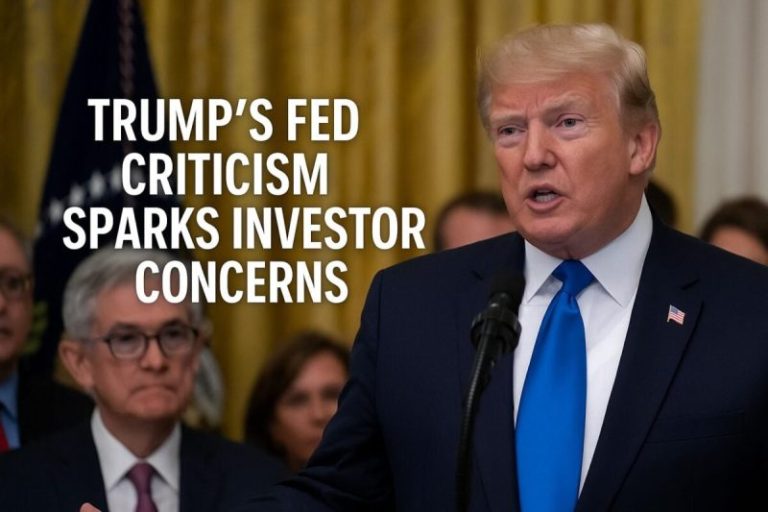
The recent spotlight on Trump’s Fed Criticism has sparked unease among investors and financial analysts alike. President Donald Trump’s repeated public attacks on Federal Reserve Chair Jerome Powell have amplified concerns over the central bank’s independence. As a result, markets have reacted with volatility, and investor sentiment has taken a noticeable hit.
Wall Street’s response to Trump’s Fed Criticism was swift. Major stock indices, including the S&P 500 and Nasdaq, posted losses amid uncertainty over future monetary policy decisions. Investors fear that political attempts to sway the Federal Reserve’s agenda may undermine its objectivity. If monetary policy is dictated by short-term political goals rather than long-term economic data, the implications could be severe for inflation, interest rates, and overall economic health.
One of the cornerstones of a stable economy is a politically neutral central bank. Trump’s Fed Criticism has called that neutrality into question. The Federal Reserve must be able to act without external pressure to maintain credibility in the eyes of global markets. Political interference could compromise its ability to control inflation or manage unemployment rates effectively.
Investor confidence remains fragile. Many market participants have shifted assets into safer investments such as gold and U.S. treasuries, seeking shelter from potential turmoil. Economic advisors stress the importance of maintaining clear, data-driven policy guidance, especially as the U.S. navigates ongoing trade issues and inflation concerns.
In the coming weeks, the Federal Reserve’s actions will be closely watched. Should Trump’s Fed Criticism intensify, it could further erode market stability and investor trust in U.S. monetary policy.
The post Trump’s Fed Criticism Sparks Investor Concerns appeared first on FinanceBrokerage.

The opportunity to buy Bitcoin under $100K may not last much longer. On April 21, 2025, Bitcoin (BTC) traded just below the $100,000 mark, a price level many analysts believe could be the last stop before a massive new rally begins. With institutional adoption rising and macroeconomic pressures easing, the case for long-term BTC growth is strengthening.
Market experts point to several factors fueling the bullish sentiment. Firstly, Bitcoin’s halving event earlier this year significantly reduced block rewards, cutting daily supply by half. Historically, halving events have preceded major bull runs. Secondly, growing interest from ETFs and institutional players is creating steady buying pressure. Lastly, declining inflation and improved global liquidity conditions are encouraging investment in risk assets like Bitcoin.
According to Bitwise CIO Matt Hougan, “It’s not too late to buy Bitcoin under $100K. This could be one of the last best opportunities before we see a surge well beyond six figures.”
Looking ahead, many analysts predict that Bitcoin could exceed $150,000 by the end of the year. While this isn’t guaranteed, trends in institutional adoption, limited supply, and rising use cases for Bitcoin suggest that prices may continue climbing.
Although short-term volatility persists, long-term investors remain focused on fundamentals. If history repeats itself, buying Bitcoin at sub-$100K levels may prove to be a decision rewarded in the coming cycle.
If you’ve been on the sidelines, now could be your moment to enter the market. The chance to buy Bitcoin under $100K might not last much longer. As always, do your research and consider your financial goals before investing.
Related: Bitcoin News | Crypto Analysis
The post Buy Bitcoin Under $100K Before The Next Bull Run appeared first on FinanceBrokerage.

The BNB price surge on April 21, 2025, stole the spotlight as Binance Coin jumped over 3.2% to cross the $600 mark. This move came as Bitcoin soared past $87,000, reigniting investor interest in altcoins. The bullish wave didn’t stop with BNB—SOL and XRP also made strong moves, reflecting a positive trend across the cryptocurrency market.
Fueling the BNB price surge was Binance’s recent $1 billion token burn, which reduced the circulating supply. Additionally, increased trading volumes and renewed faith in Binance’s ecosystem helped BNB regain upward momentum. Investors are optimistic that Binance’s expansion and focus on compliance could drive long-term growth.
Solana (SOL) saw a 10.2% rally, breaking above the $135 resistance level with strong volume and technical confirmation. XRP, on the other hand, climbed past $2.10, setting the stage for a potential breakout above $2.15. These moves indicate bullish setups that are gaining attention from both traders and long-term holders.
Bitcoin’s rise above $87,000 reflects renewed demand for a digital safe-haven. With increasing global economic uncertainty and inflation concerns, many investors view Bitcoin as “digital gold.” This sentiment is spilling over into altcoins, triggering the current crypto rally.
The BNB price surge highlights growing investor confidence in altcoins. Alongside Bitcoin’s strength, tokens like SOL and XRP are enjoying increased attention. If this trend continues, more gains could be ahead for altcoin markets. Investors should monitor resistance levels and trading volumes closely for signs of sustained momentum.
Related: Crypto Updates | Market Trends
The post BNB Price Surge Leads Crypto Gains as Bitcoin Climbs appeared first on FinanceBrokerage.
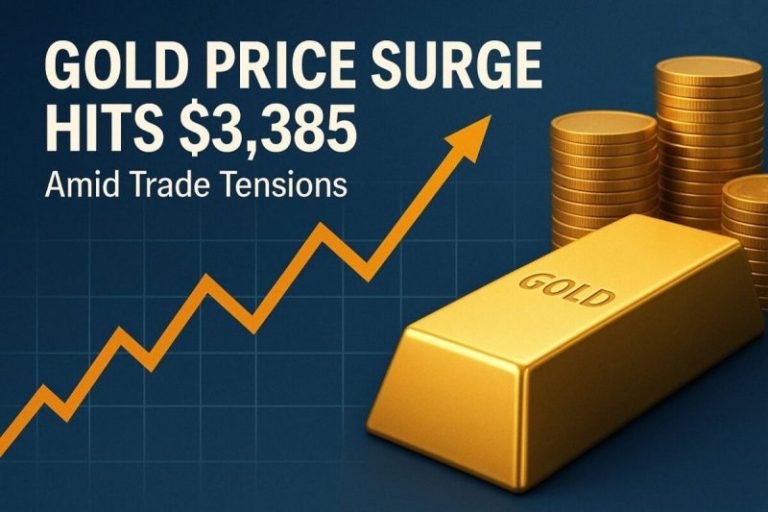
The gold price surge continued on April 21, 2025, as gold hit a record high of $3,385 per ounce. This milestone came amid a weakening U.S. dollar and renewed global trade tensions. Investors are increasingly turning to gold as a safe-haven asset, signaling market uncertainty and shifting investment strategies.
The U.S. dollar index fell sharply, hitting its lowest level since January 2024. A weaker dollar typically boosts gold prices, as it makes the metal more attractive to international buyers. This contributed significantly to the ongoing gold price surge seen in recent weeks.
In addition, economic data indicating slower growth in key global markets has prompted investors to reduce their exposure to riskier assets. Gold’s long-standing reputation as a hedge against economic uncertainty has once again proven true.
Ongoing trade friction between major economies—particularly the U.S. and China—has triggered market anxiety. Announcements related to new tariffs and supply chain risks are further motivating the shift from equities to gold. This environment is ideal for a gold price surge to gain momentum.
Market analysts suggest that the upward trend is far from over. If inflation persists and interest rates remain steady or fall, the gold price could climb even higher. Some predict that the next psychological barrier of $3,500 per ounce may soon be tested.
As the global economic landscape continues to evolve, gold is expected to remain a central pillar in investor portfolios. Whether as a hedge against inflation or a response to geopolitical unrest, the gold price surge is being closely monitored by financial experts.
Related: Market Insights | Commodity News
The post Gold Price Surge Hits $3,385 Amid Trade Tensions appeared first on FinanceBrokerage.

On April 22, 2025, oil prices rebound experienced a modest rebound following a significant drop the previous day. The initial decline was triggered by President Donald Trump’s renewed criticism of Federal Reserve Chair Jerome Powell, which unsettled financial markets and raised concerns about the central bank’s independence.
President Trump’s comments on Monday intensified investor fears regarding the Federal Reserve’s autonomy in setting monetary policy. The criticism led to a broad sell-off in equities and commodities, with oil prices bearing the brunt of the market’s anxiety.
Despite the initial plunge, oil prices rebound edged higher on Tuesday as investors engaged in short-covering. Brent crude futures rose 0.5% to $66.62 per barrel, while West Texas Intermediate (WTI) crude for May delivery increased by 1% to $63.73 per barrel. The more actively traded WTI June contract also gained 0.7% to $62.84 per barrel.
Market participants remain cautious amid ongoing fears of a potential recession linked to U.S. tariff policies and concerns over Federal Reserve independence. These factors have increased worries about the U.S. economy and crude demand. Additionally, progress in U.S.-Iran nuclear deal talks has eased supply concerns, potentially impacting oil prices further.
As the situation evolves, investors will closely monitor geopolitical developments and central bank communications to assess the potential long-term impacts on the energy markets.
The post Oil Prices Rebound After Trump’s Criticism of Powell appeared first on FinanceBrokerage.

YouTube said Monday it would settle a lawsuit brought by President Donald Trump for more than $24 million, adding to a growing list of settlements with tech and media companies that have amassed millions of dollars for Trump’s projects.
Trump sued after his YouTube account was banned in 2021. After the Jan. 6 riot, YouTube said content posted to Trump’s channel raised “concerns about the ongoing potential for violence.” His account was reinstated in 2023.
Monday’s settlement makes YouTube the last major tech platform to settle a lawsuit with Trump, who similarly sued Meta and Twitter for banning his accounts in the aftermath of Jan. 6. Meta, the owner of Facebook and Instagram, settled for $25 million, while Twitter, since renamed X, settled for about $10 million.
A notice of settlement for Trump’s lawsuit against YouTube details that $22 million of it will go toward building a new White House ballroom. Trump has touted that the addition will have room for 900 people, and the White House has said it could cost $200 million to build.
Other plaintiffs that joined Trump’s suit, such as the American Conservative Union and a number of other people, will get $2.5 million of the settlement.
In addition to tech companies, many major media outlets have settled lawsuits with Trump over the past year.
In July, Paramount Global settled with him for $16 million after he took issue with a “60 Minutes” interview with Kamala Harris that aired on CBS.
In December, Disney settled with Trump over a lawsuit in which he accused ABC and anchor George Stephanopoulos of defamation in an interview with Rep. Nancy Mace, R-S.C. Disney paid Trump’s future presidential library $15 million as part of the settlement.
Disney came under pressure from the administration again when it recently suspended “Jimmy Kimmel Live!” for nearly a week after two major station owners threatened to stop airing the show. One of the station owners, Nexstar, is seeking clearance from Trump’s Federal Communications Commission chairman for a $6.2 billion merger.
The other station owner, Sinclair, is reportedly considering a merger, which the FCC would also need to approve.
Trump is also suing The Wall Street Journal over its reporting about his friendship with Jeffrey Epstein, and he recently sued The New York Times for $15 billion. A judge struck down that lawsuit, though Trump could refile it.

The newly formed media corporation Paramount Skydance has acquired The Free Press, an online news and commentary outlet co-founded by Bari Weiss, who will join CBS News as editor-in-chief.
Weiss launched The Free Press in 2021 with her wife, Nellie Bowles, and her sister, Suzy Weiss. They have presented the publication as a heterodox alternative to the legacy news media and a bulwark against “ideological narratives,” particularly on the political left.
The acquisition is one of Skydance chief David Ellison’s most significant early moves to reshape the news unit at Paramount, which he acquired in a blockbuster $8 billion deal earlier this year.
In seeking federal approval of the merger, Skydance vowed to embrace “diverse viewpoints” and represent “the varied ideological perspectives of American viewers.” The company also pledged to install an ombudsman at the nearly 100-year-old CBS News operation.
“This partnership allows our ethos of fearless, independent journalism to reach an enormous, diverse, and influential audience,” Weiss said in a news release. “We honor the extraordinary legacy of CBS News by committing ourselves to a singular mission: building the most trusted news organization of the 21st Century.”
The Free Press has roughly 1.5 million subscribers on Substack, with more than 170,000 of them paid, according to Paramount Skydance. The Financial Times estimated that the publication generates more than $15 million in annual subscription revenue. NBC News has not independently verified that figure.
“Bari is a proven champion of independent, principled journalism, and I am confident her entrepreneurial drive and editorial vision will invigorate CBS News,” Ellison said in a statement. “This move is part of Paramount’s bigger vision to modernize content and the way it connects — directly and passionately — to audiences around the world.”
The acquisition talks between Ellison and Weiss were first reported in late June by Status, a media industry newsletter. Ellison is the son of billionaire tech mogul Larry Ellison, the co-founder of the software firm Oracle.
Weiss co-founded The Free Press after quitting the opinion section of The New York Times. In a resignation letter that was published online, Weiss decried what she characterized as the “illiberal environment” at the newspaper.
The Free Press earned wide attention in April 2024 after it published an essay from Uri Berliner, a senior business editor at National Public Radio who accused his employer of organizing around a “progressive worldview.” Berliner then resigned from NPR and joined The Free Press.
The publication’s regular stable of columnists includes Tyler Cowen, an economist and podcaster; Matthew Continetti, the author of a book about the evolution of American conservatism; and Niall Ferguson, a British-American historian.
CBS News has repeatedly found itself in the national spotlight in recent months. President Donald Trump filed a lawsuit last year against Paramount accusing “60 Minutes” of deceptively editing an interview with then-Vice President Kamala Harris.
CBS denied the claim. Paramount settled Trump’s lawsuit for $16 million.
The Federal Communications Commission is still investigating whether CBS engaged in “news distortion.” The commission is chaired by Brendan Carr, who was appointed by Trump at the start of his second term.

HONG KONG — China outlined new curbs on exports of rare earths and related technologies on Thursday, extending controls over use of the elements critical for many high-tech and military products ahead of a meeting in about three weeks between President Donald Trump and Chinese leader Xi Jinping.
The regulations announced by the Ministry of Commerce require foreign companies to get special approval to export items that contain even small traces of rare earths elements sourced from China. These critical minerals are needed in a broad range of products, from jet engines, radar systems and electric vehicles to consumer electronics including laptops and phones.
Beijing will also impose permitting requirements on exports of technologies related to rare earths mining, smelting, recycling and magnet-making, it said.
China accounts for nearly 70% of the world’s rare earths mining. It also controls roughly 90% of global rare earths processing. Access to such materials is a key point of contention in trade talks between Washington and Beijing.
As Trump has raised tariffs on imports of many products from China, Beijing has doubled down on controls on the strategically vital minerals, raising concerns over potential shortages for manufacturers in the U.S. and elsewhere.
It was not immediately clear how China plans to enforce the new policies overseas.
During a cabinet meeting Thursday, Trump said he had yet to be briefed on the new rules but suggested that the U.S. could stop buying Chinese goods. “We import from China massive amounts,” Trump said. “Maybe we’ll have to stop doing that.”
Neha Mukherjee, a rare earths analyst at Benchmark Mineral Intelligence, called the new export controls “a strategic move by China that mirror some of Washington’s new chip export rules.
“Most rare earth magnet manufacturers in the U.S., Japan and elsewhere remain heavily dependent on rare earths from China, so these restrictions will force some difficult decisions — especially for any company involved in military uses of rare earths because most of those export licenses are expected to be denied, he said.
“The message is clear: if the U.S. and its allies want supply chain security, they must build independent value chains from mine to magnet,” Mukherjee said.
The new restrictions are to “better safeguard national security” and to stop uses in “sensitive fields such as the military” that stem from rare earths processed or sourced from China or from its related technologies, the Commerce Ministry said.
It said some unnamed “overseas bodies and individuals” had transferred rare earths elements and technologies from China abroad for military or other sensitive uses which caused “significant damage” to its national security.
The new curbs were announced just weeks ahead of an expected meeting between Trump and Chinese President Xi Jinping on the sidelines of the Asia-Pacific Economic Cooperation forum in South Korea, that begins at the end of this month.
“Rare earths will continue to be a key part of negotiations for Washington and Beijing,” George Chen, a partner at The Asia Group, said in an emailed comment. “Both sides want more stability but there will be still a lot of noises before the two leaders, President Trump and Xi, can make a final deal next year when they meet. Those noises are all negotiation tactics.”
These new restrictions will likely prompt additional government and private investments in developing a mine-to-magnet supply chain outside of China. Mukherjee said that $520 million of investments in the American rare earths industry were announced just in the second quarter with most of that coming from the government.
And there is some progress already being made with American magnet maker Noveon announcing an agreement with Lynas Rare Earths this week to secure a supply of rare earths outside of China from Lynas’ mine in Australia, and MP Materials preparing to begin producing magnets later this year at its new plant in Texas that uses rare earths from the only U.S. mine that it operates in California.
In July, the U.S. Defense Department agreed to invest $400 million in shares of the Las Vegas company, establish a floor for the price of key elements, and ensure that all of the magnets made at a new plant in the first 10 years are purchased.
An MP Materials spokesperson said China’s action “reinforces the need for forward-leaning U.S. industrial policy. Building resilient supply chains is a matter of economic and national security.”
Wade Senti, president of the U.S. permanent magnet company AML, said it’s time to innovate.
“The game of chess that China is playing underscores the importance of developing innovation that changes the game and puts the United States in leading position,” Senti said.
Nazak Nikakhtar, a former Commerce Department undersecretary, said the new restrictions are “a significant development and escalation” by extending controls to related technology and equipment and to sectors like chipmakers. “This should be a wake-up call to the U.S. government that we need to invest in and appropriate more to domestic capabilities. Both are critical to rebuild America’s rare earths industrial base,” she said.
In April, Chinese authorities imposed export curbs on seven rare earth elements shortly after Trump unveiled his steep tariffs on many trading partners including China.
While supplies remain uncertain, China approved some permits for rare earth exports in June and said it was speeding up its approval processes.